Hiking the Organ Pipes at Mt. Wellington

The view of the Organ Pipes on Mt. Wellington near Hobart, Tasmania

The view of the Organ Pipes on Mt. Wellington near Hobart, Tasmania

Just a short drive from Hobart’s CBD is Mt. Wellington, which, like most of Tasmania, is filled with short walking tracks. I did the 3 hour Organ Pipes loop, which is fairly steep and rocky but worth the trek for the views of Hobart and the surroundings. Despite being so close to the city, the area was mostly empty on a Tuesday afternoon save for a French family and a British couple.

The walk is filled with beautiful flowers and sneaky skinks. I also saw a pretty cool black and red spider and some interesting birds. The actual Organ Pipes, which are columns of dolerite, are magnificent, though you need rock climbing gear to get really close to them.

Continue reading

Lake St. Clair and Mt. Field National Park

A view from the shore of Lake St. Clair in Tasmania

A view from the shore of Lake St. Clair in Tasmania

Following my experiences at Cradle Mountain I was excited to take in more of the national parks of Tasmania. Luckily, Lake St. Clair and Mt. Field are just south of the mountain and the drive is puntuated by the lovely mining towns of Rosebery, Zeehan, Strahan and Queenstown.

Lake St. Clair is Australia’s deepest lake and Mt. Field National Park is the oldest national park in Tassie. Both parks have several walking trails – as do most in Tasmania – and of course there are loads of waterfalls and species of wildlife to take in.

Continue reading

Cradle Mountain

Cradle Mountain viewed from the Dove Lake walking circuit

Cradle Mountain viewed from the Dove Lake walking circuit

Cradle Mountain and the surrounding national park is widely considered the crown jewel of Tasmania, and for good reason. There’s absolutely gorgeous scenery, easily accessible wildlife, and walking trails for all levels of fitness.

I spent two days at the park and did two major walking tracks: the circuit around Dove Lake and a more strenuous trek up to Marion’s Lookout. There was an option to climb to the summit of Cradle Mountain, but I was running out of time (and energy).

I saw a wombat in the wild for the first time, and the charming creature became my favorite Australian animal. He was entirely oblivious to the people around him and was just interested in scratching his butt. That’s a life philosophy I can get behind. I also saw an echidna and some Tasmanian devils at a sanctuary close to the entrance of the park.

Continue reading

Cataract Gorge and Tamar Island

A black snake on Tamar Island

A black snake on Tamar Island

I got to Launceston in time for Festivale, where I got to sample local wines and watch some great street performers and musical acts. I hadn’t heard of the event in advance, so it was a nice surprise and a welcome break from the hiking and sightseeing I’d been doing.

Upon leaving Tasmania’s second largest city I stopped by two local natural wonders – the Cataract Gorge and Tamar Island. Like everywhere else in Tasmania, the sights are well set up for visitors with clear and safe walking tracks loaded with wildlife. There is also a lot of historical elements to these sights and you can learn about the lives of early Tasmanian settlers.

Continue reading

Bay of Fires

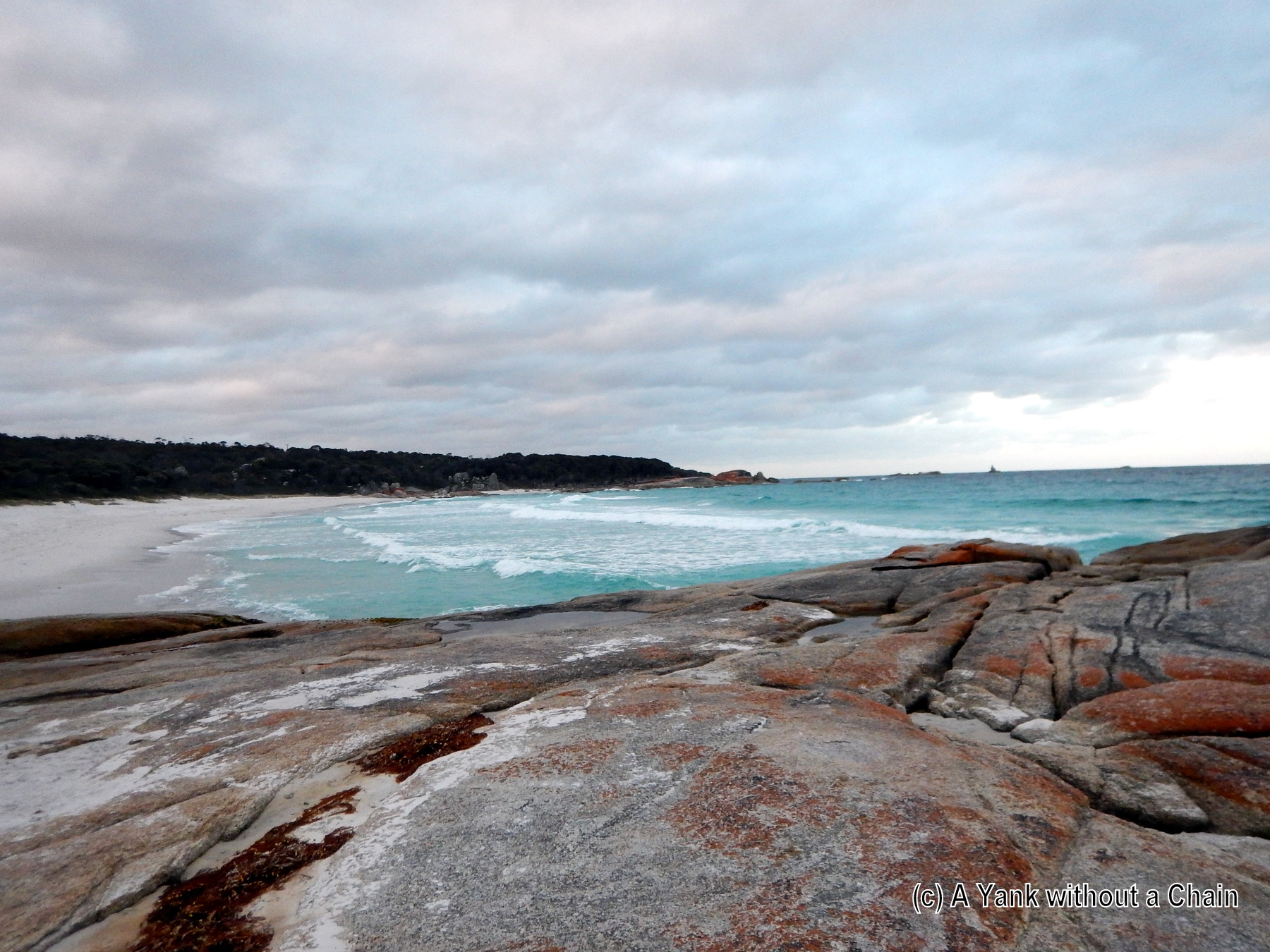
The spectacular view from the Bay of Fires beach

The spectacular view from the Bay of Fires beach

Following my day on the Tasman Peninsula I made a stop at Triabunna, hoping to make it to Maria Island. I didn’t realize I was meant to book the ferry to the island in advance, so I wasn’t able to go. However, I did meet some hilarious and hospitable fisherman in the tiny town and I spent a day playing pool and hanging out on their fishing boat. It’s cliche, but that’s the best thing about travel… you never know who you’ll meet or where the road will take you.

After spending some time in Triabunna, I made my way further north to the Bay of Fires, which is consistently ranked among the best beaches in the world. It’s a quiet place with free camping spots and nearly endless walking opportunities. There are fairy penguins and wallabies and loads of other creatures to see, in addition to the striking red rocks along the beach. Contrary to common assumption, the bay is not actually named for these red rocks but for the fires that the European settlers saw the aboriginals making along the coastline.

Continue reading